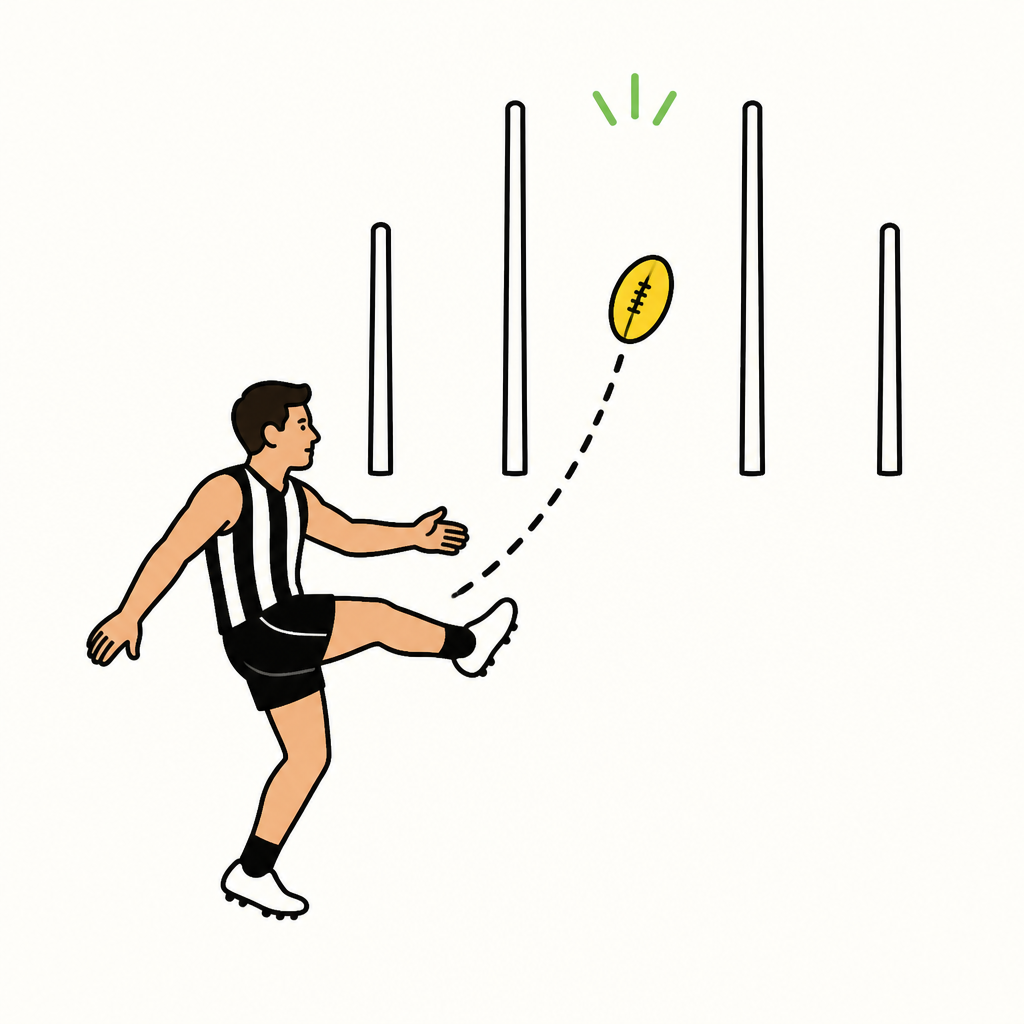
Goal
Kick the ball through the two middle posts for 6 points.
AFL is a continuous, oval-field game where teams move the ball by kicking, handballing, marking, and contesting possession.
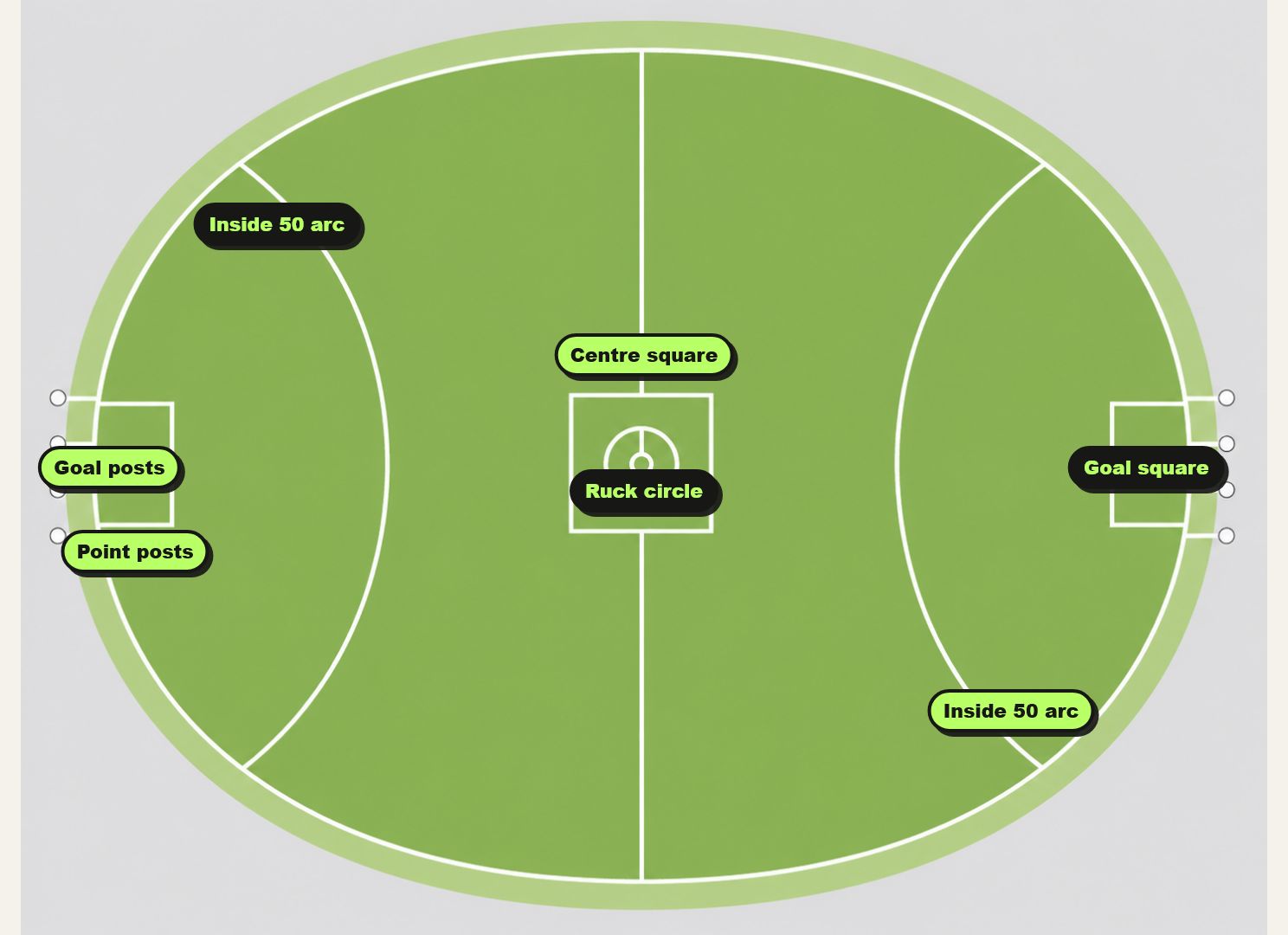
The core terms that make the rest of the rules easier to read.
Kick the ball through the two middle posts for 6 points.
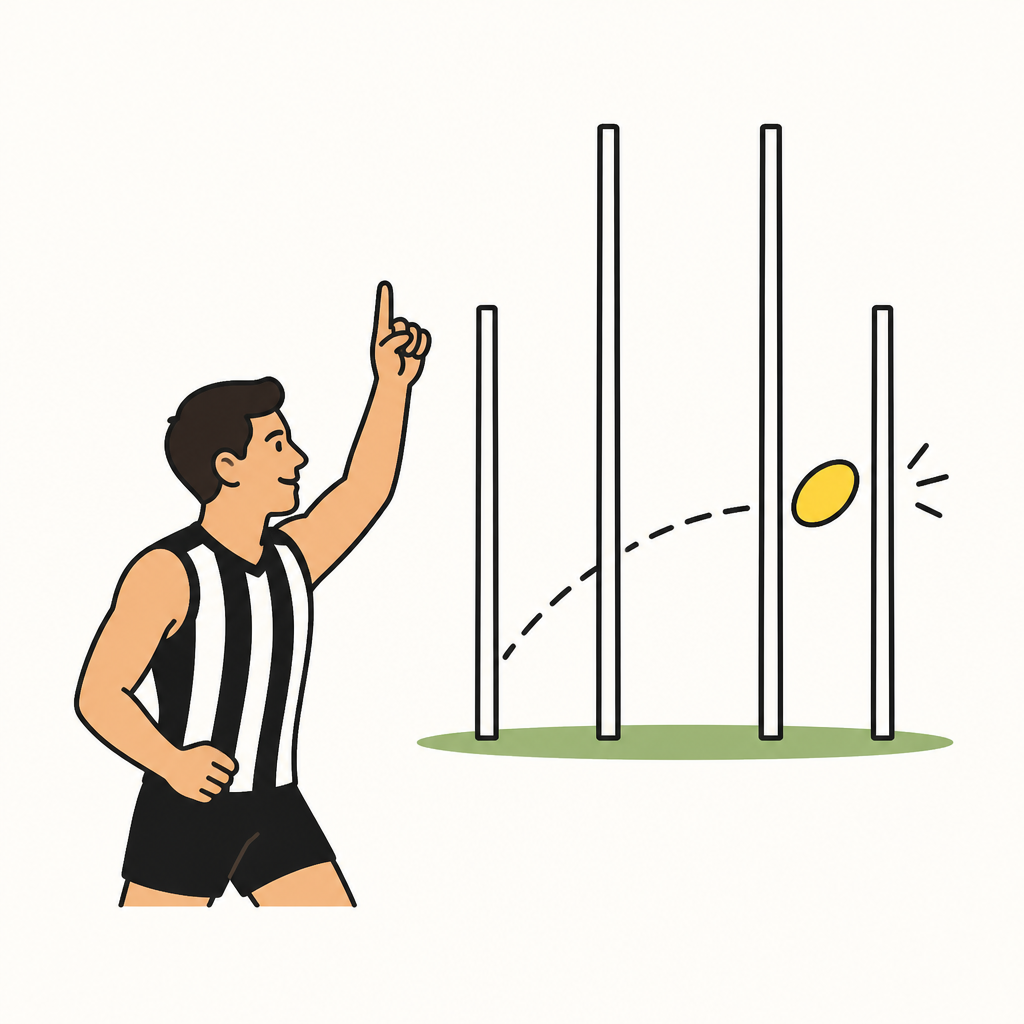
Score 1 point if the ball goes through a side gap, is touched through, or hits a post.
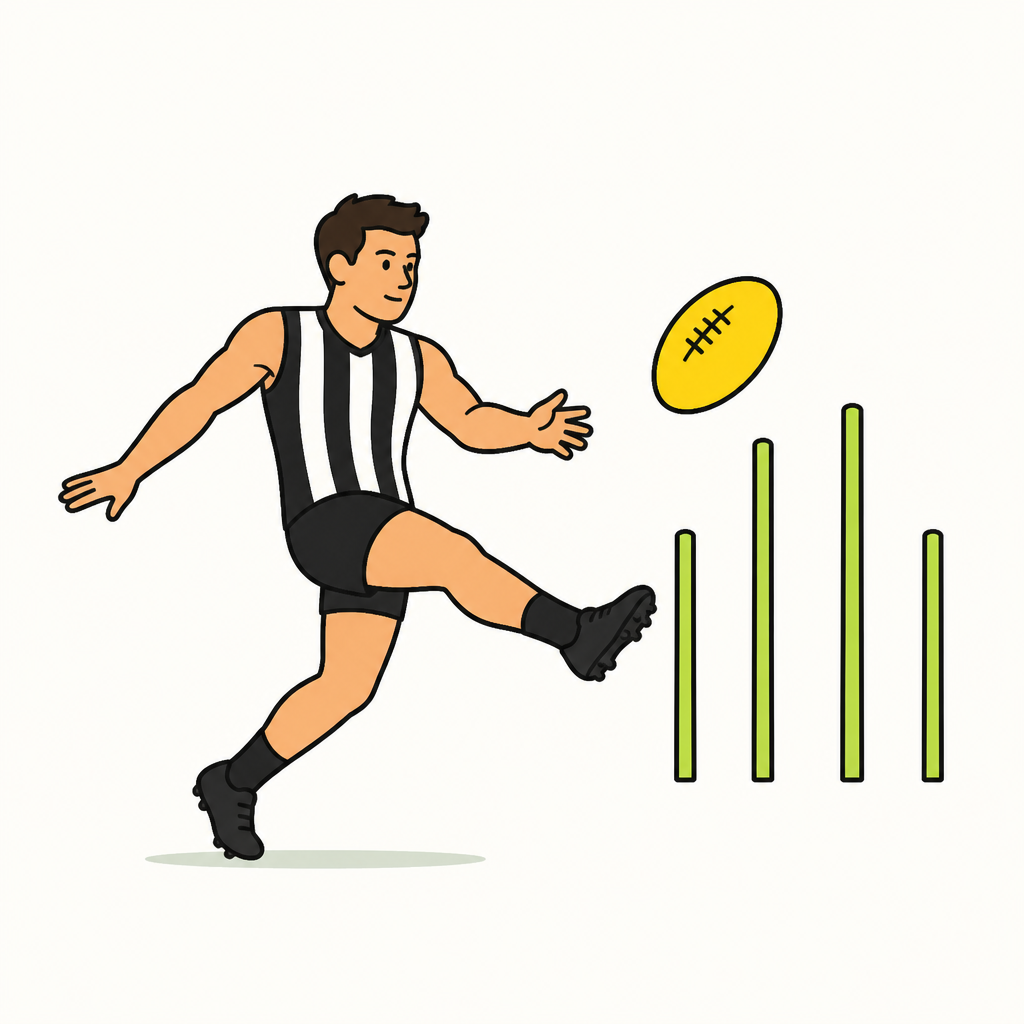
A legal kick or handball. Disposals are the basic measure of how often a team uses the ball.
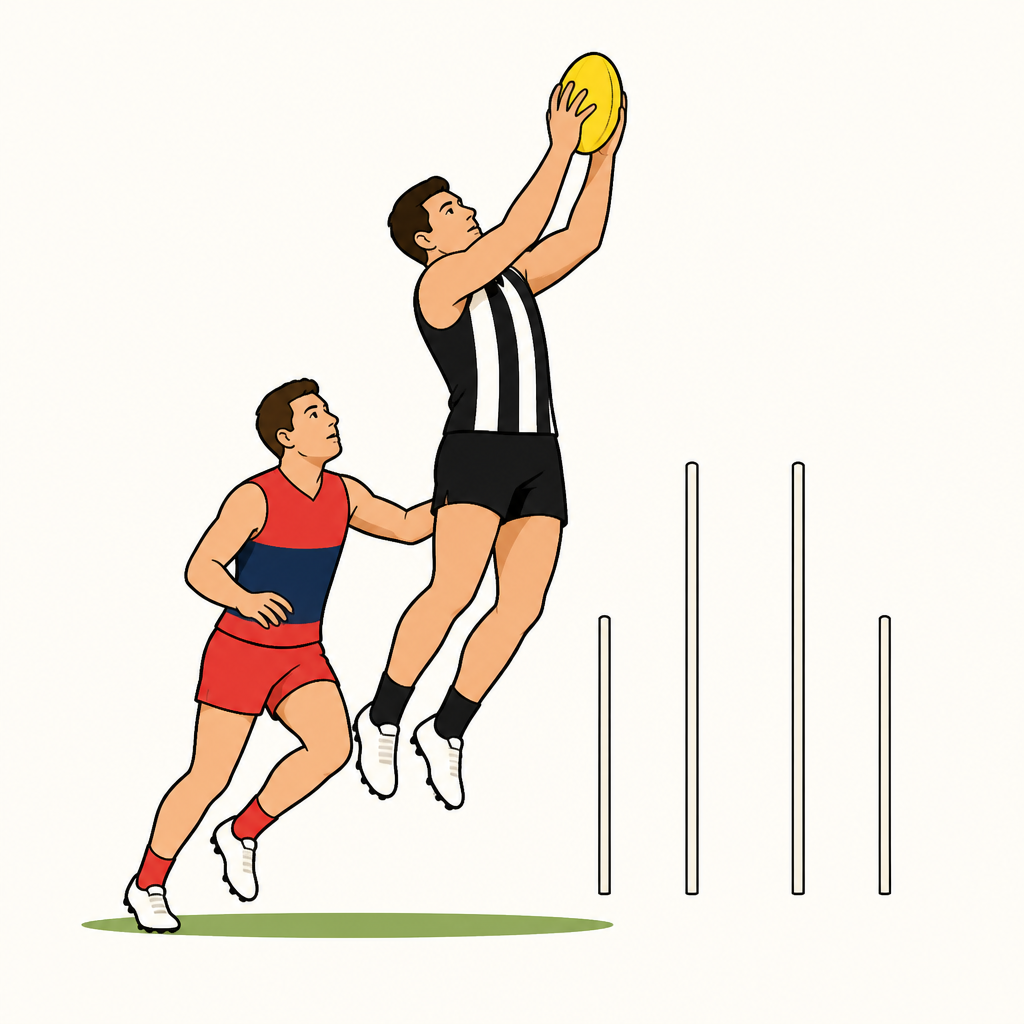
A clean catch from a kick, usually giving the player a free kick from that spot.
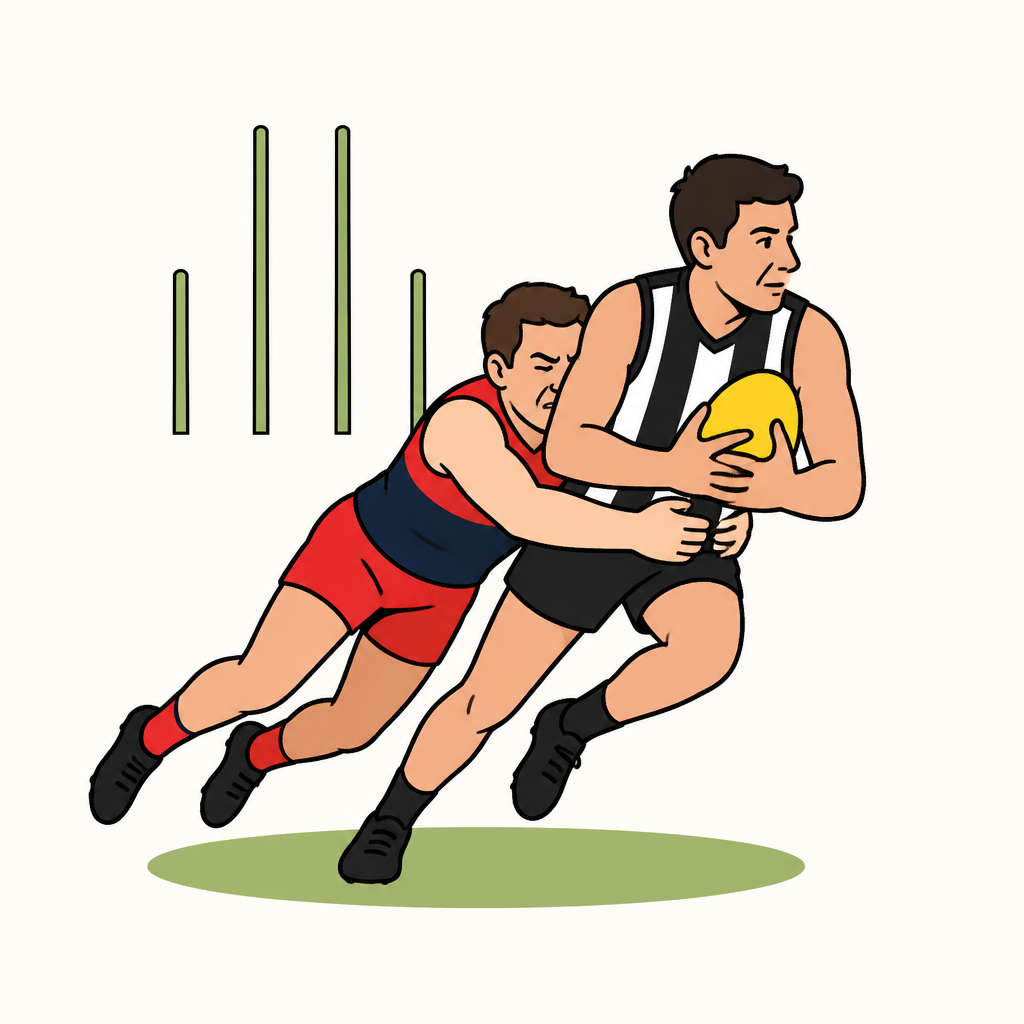
Stopping or pressuring the player with the ball. Tackles are a pressure stat.
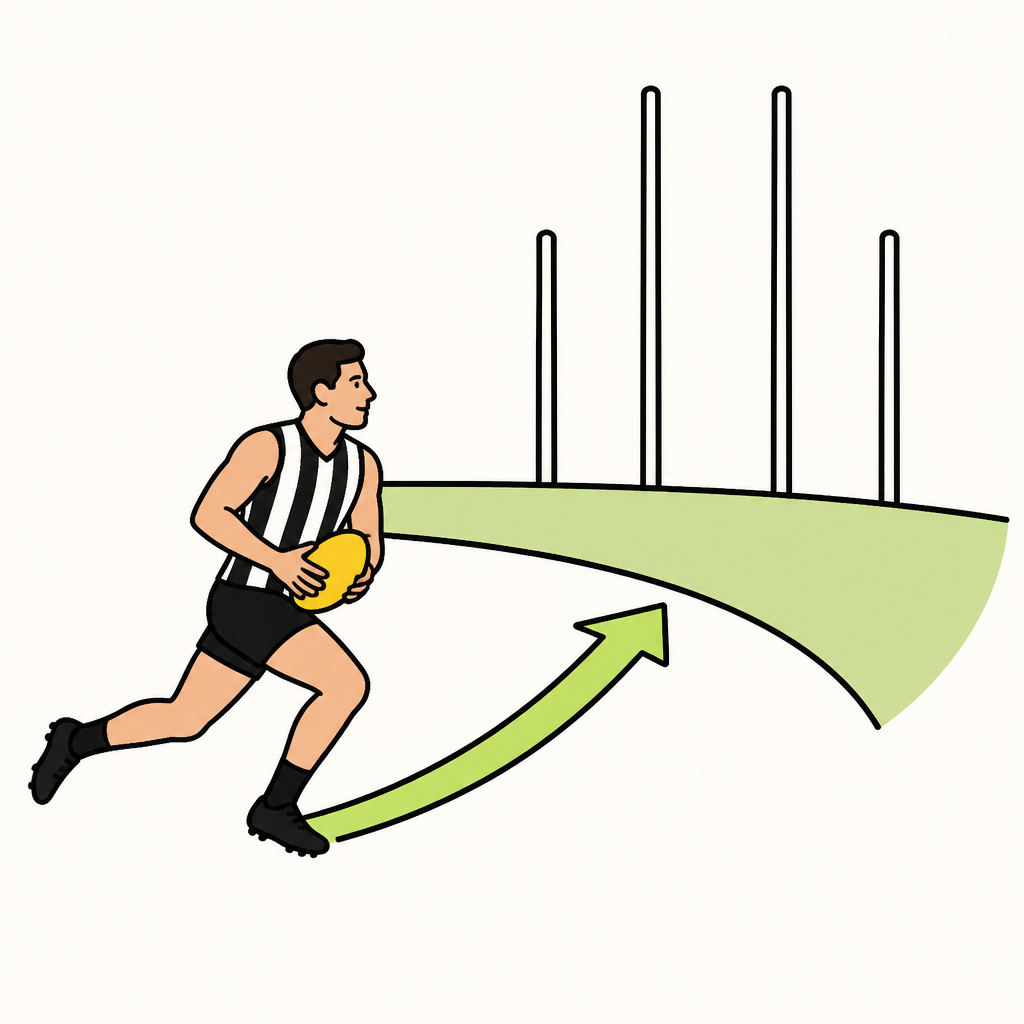
An attacking entry into the 50-metre arc. More inside 50s usually means more scoring chances.
How possession, scoring, and switches of play happen.
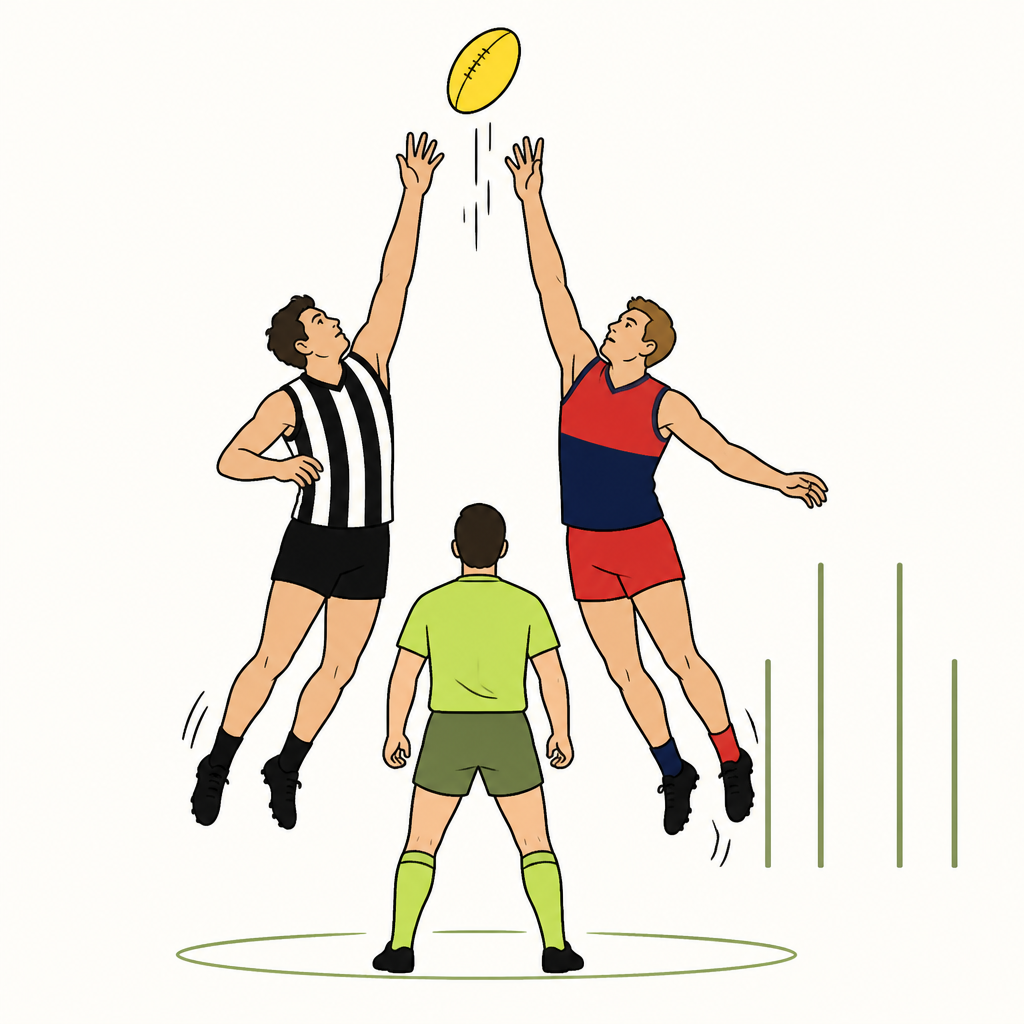
Play starts with a centre bounce, where rucks contest the ball.
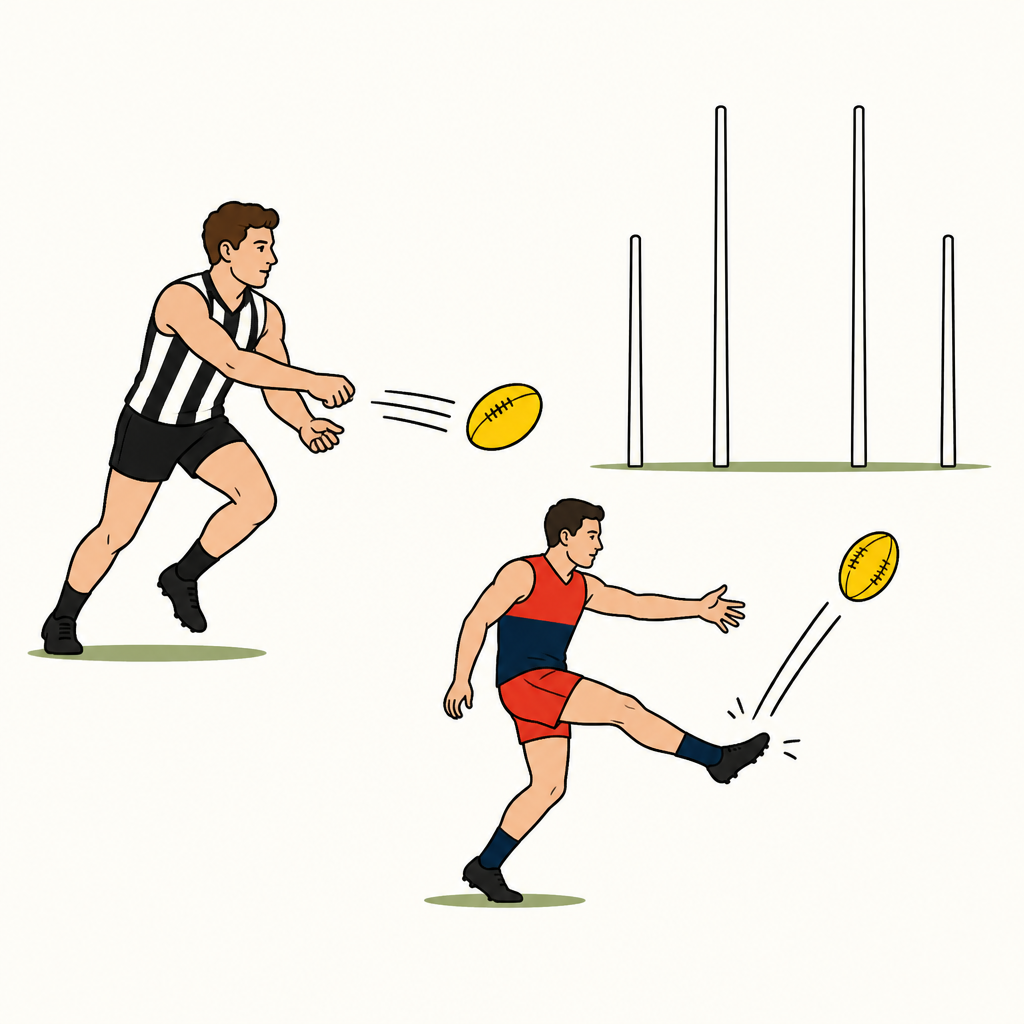
Players advance the ball by kicks and handballs, not throws.
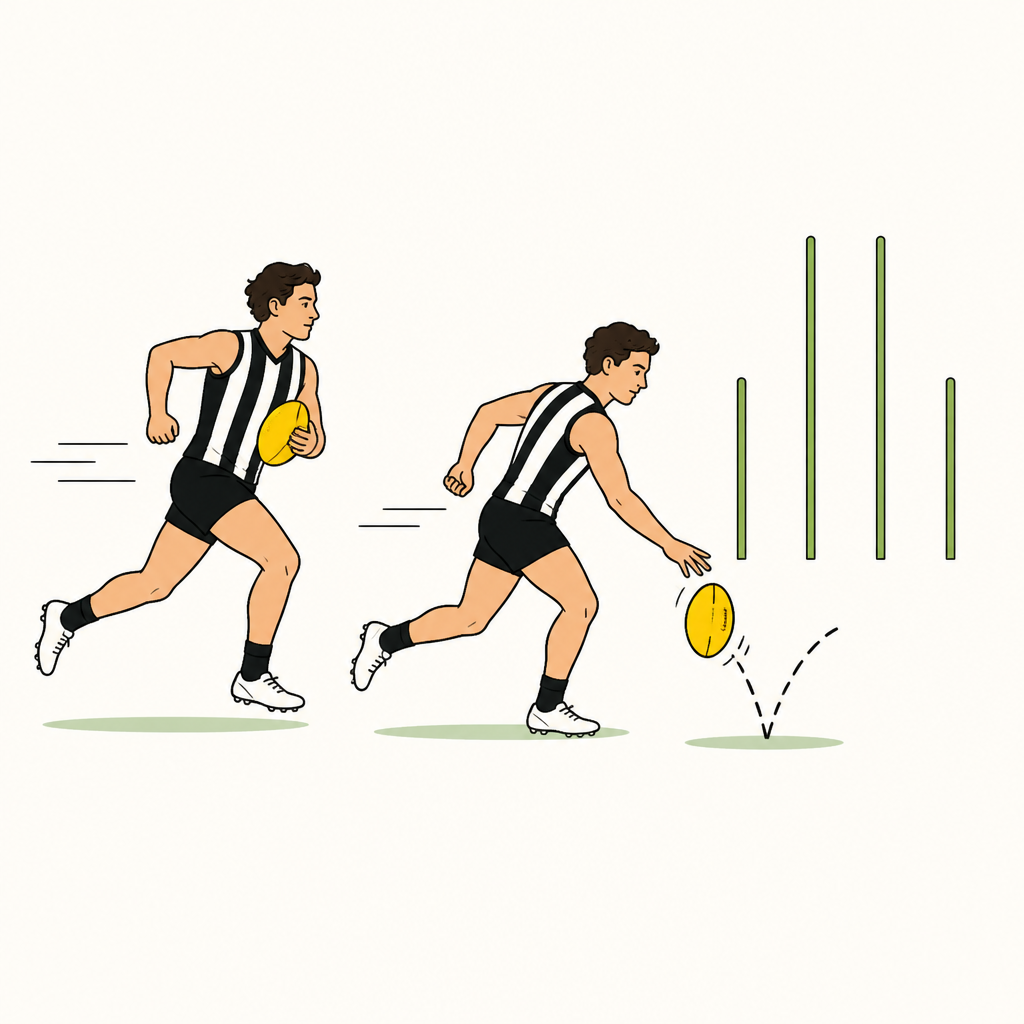
A player running with the ball must bounce it periodically.
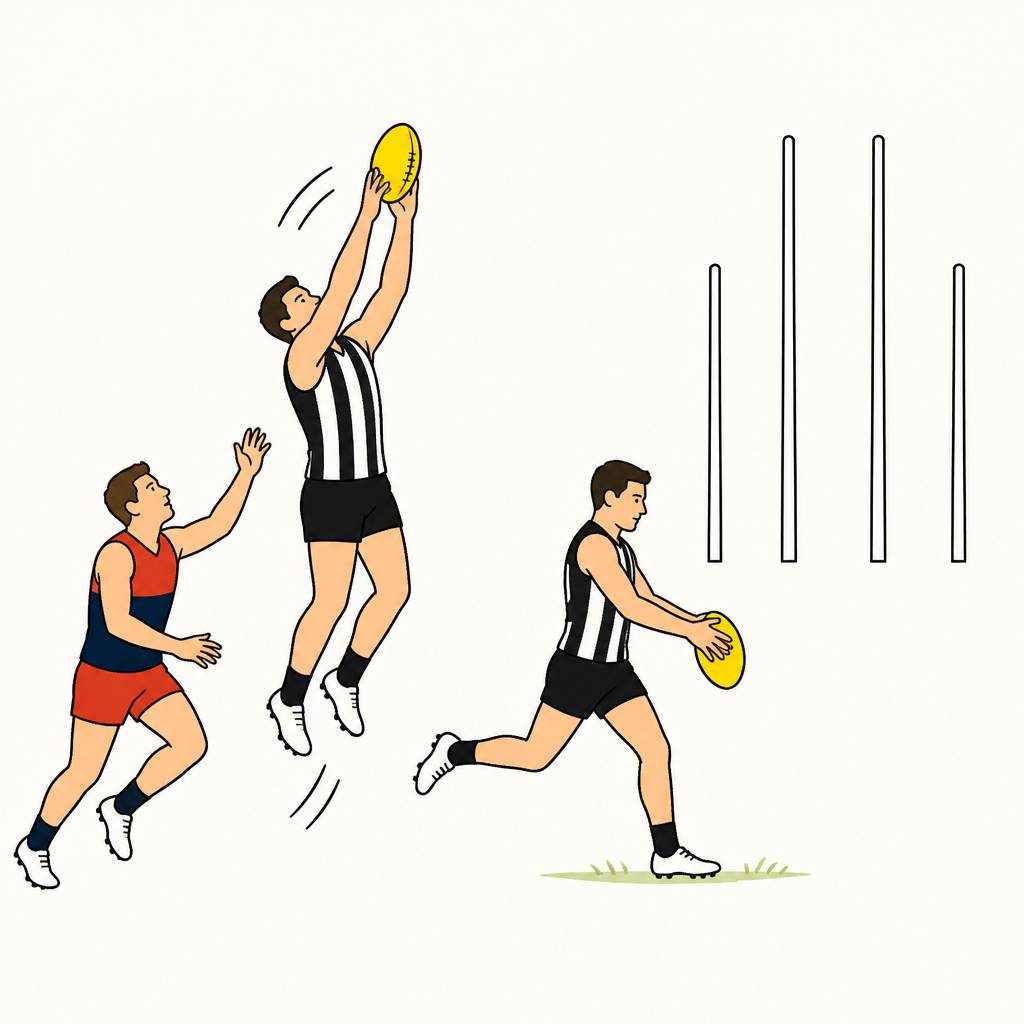
A clean mark usually stops play and gives the player a kick from that spot.
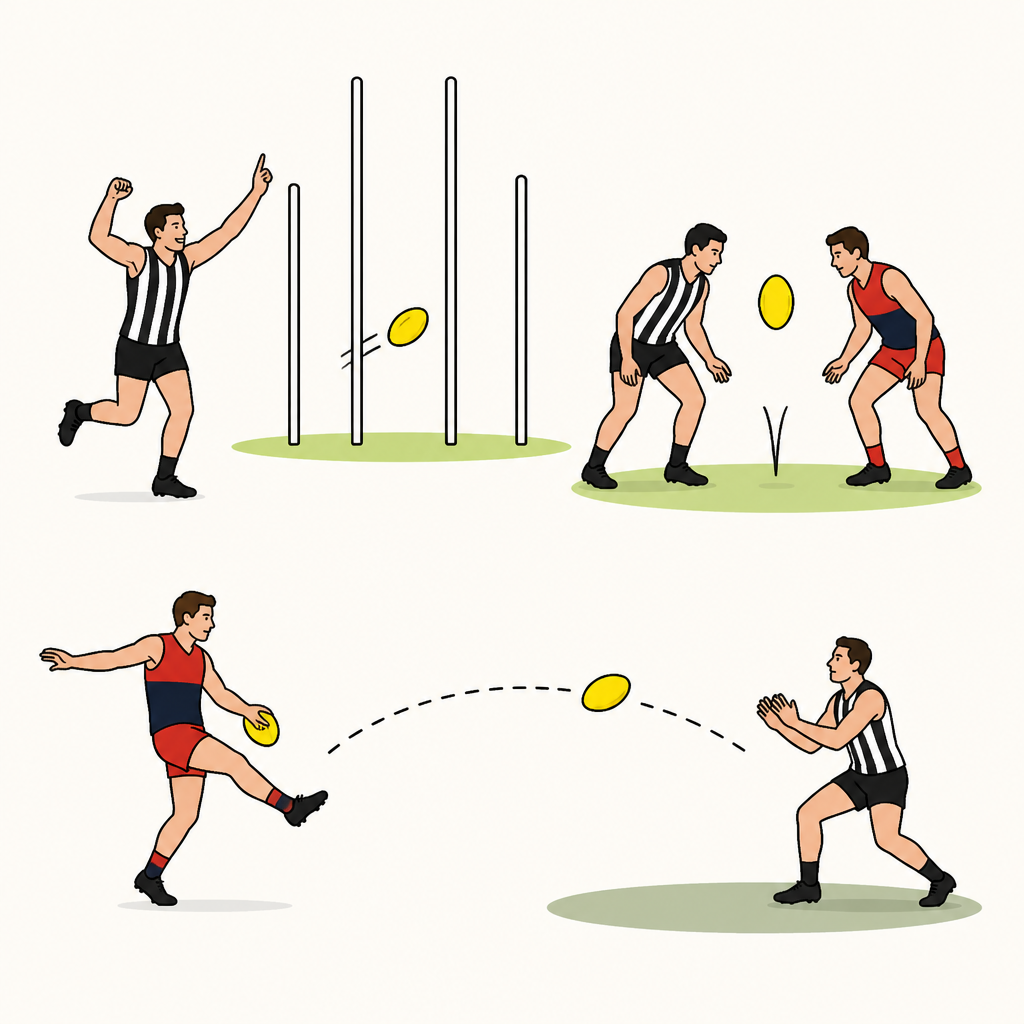
After a goal, play restarts from the centre. After a behind, the defending team usually kicks back in.
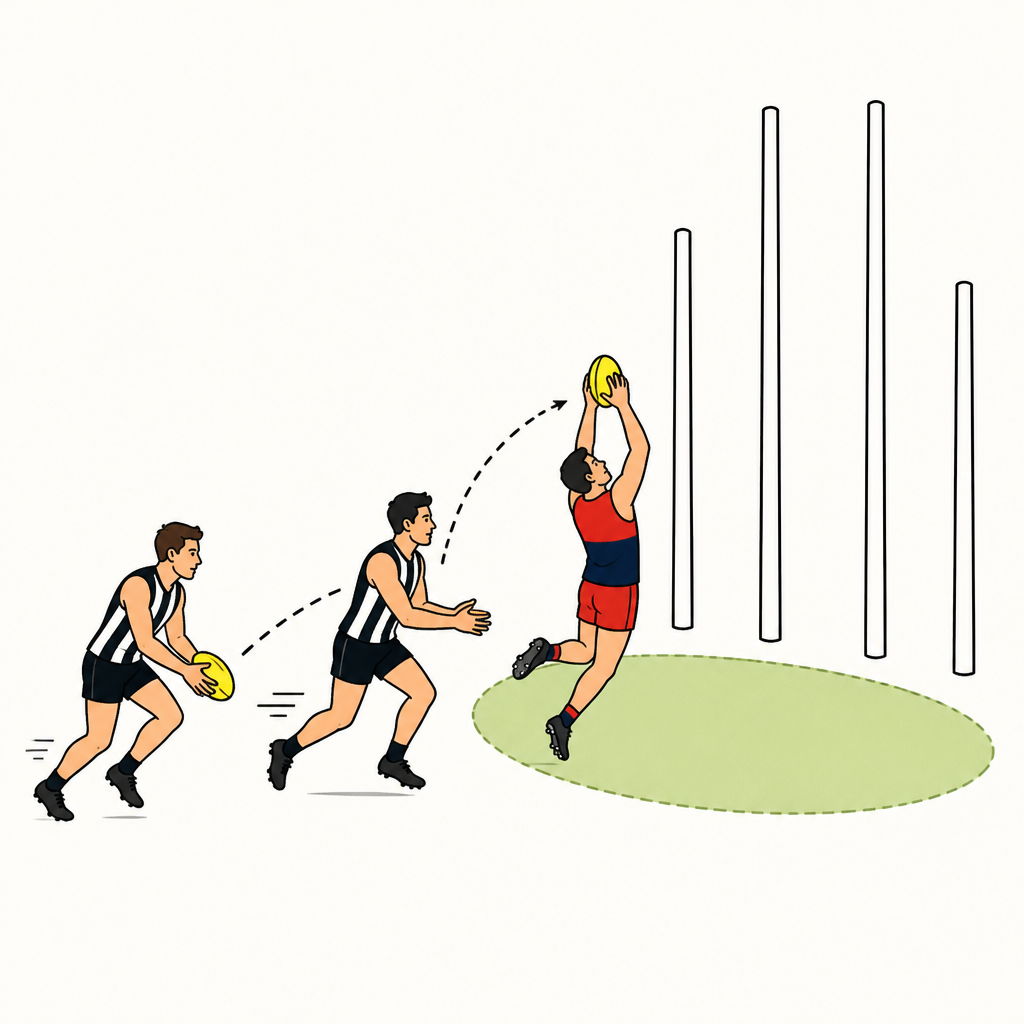
Teams try to win clearances, move inside 50, and turn entries into scoring shots.
How long the game runs, and what can change the ending.
An AFL match is played over 4 quarters.
The clock can be extended for stoppages, injuries, goals, and other delays.
If a player has a set shot when the siren sounds, they may still take that kick.
Finals can use extra time if scores are tied, while regular-season games can finish drawn.
Plain-English meanings for common challenge columns.
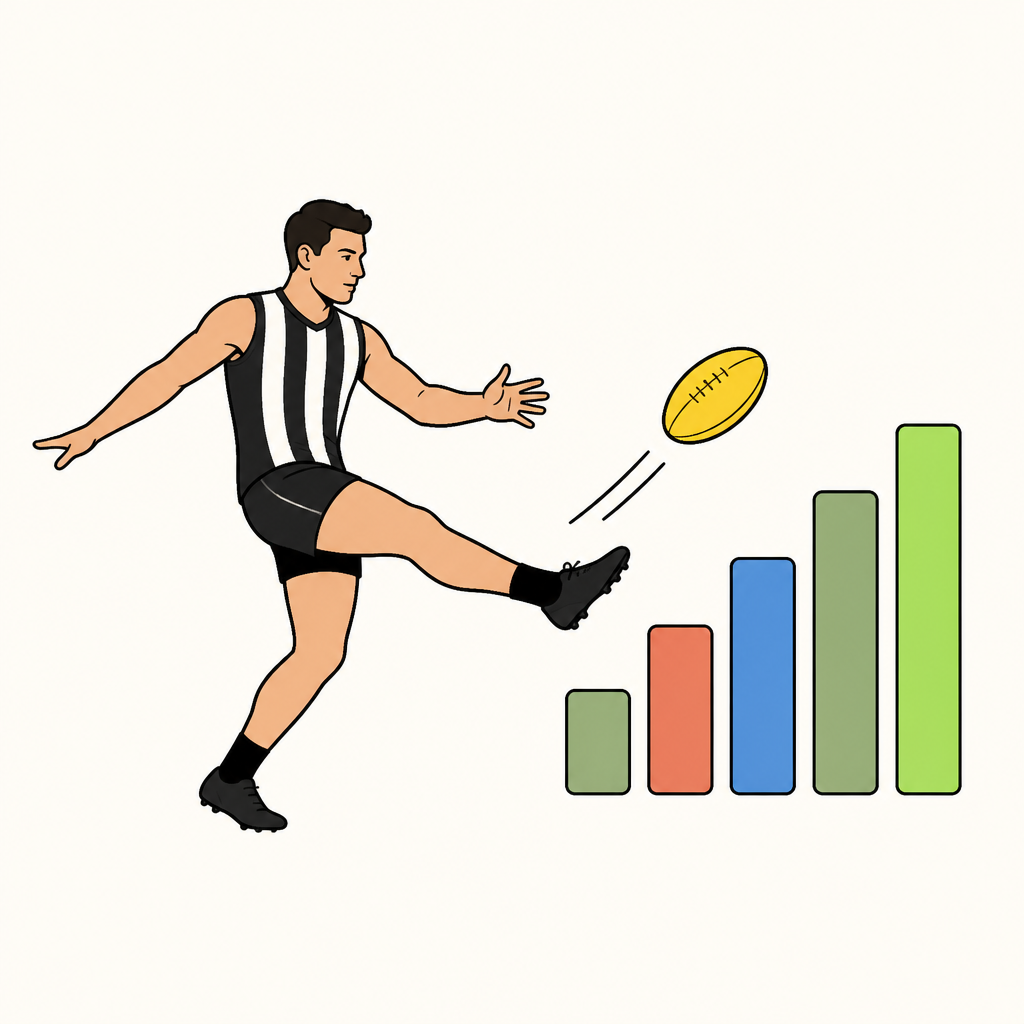
Times the team moved the ball by foot.
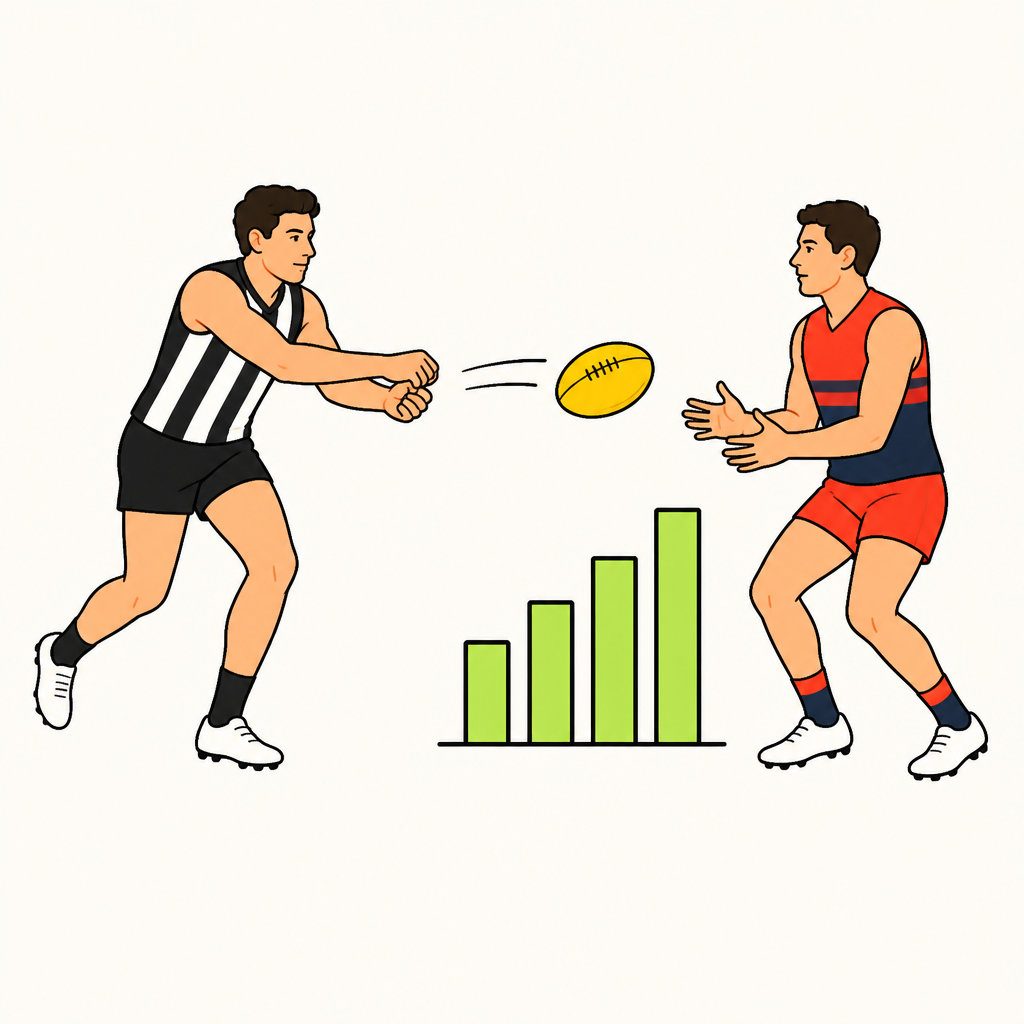
Times the team legally passed by hand.
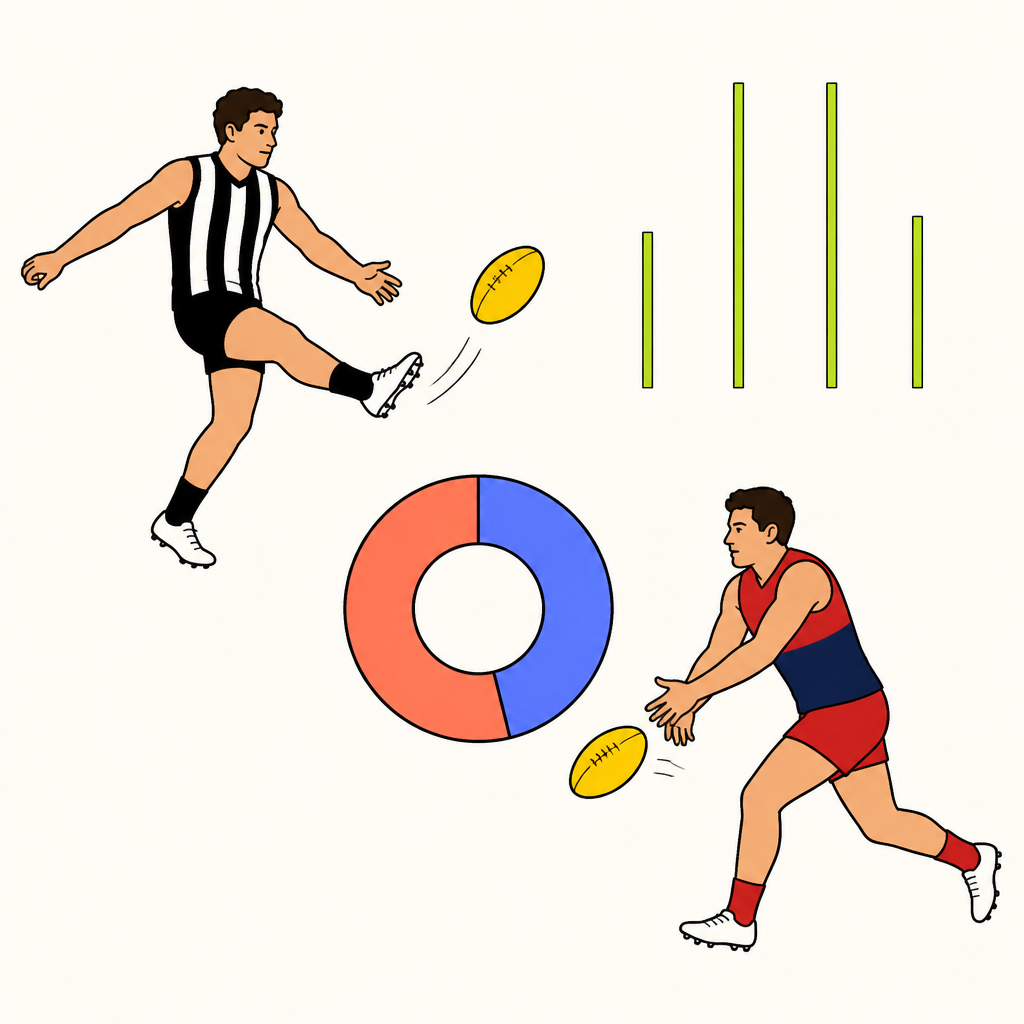
Kicks plus handballs.
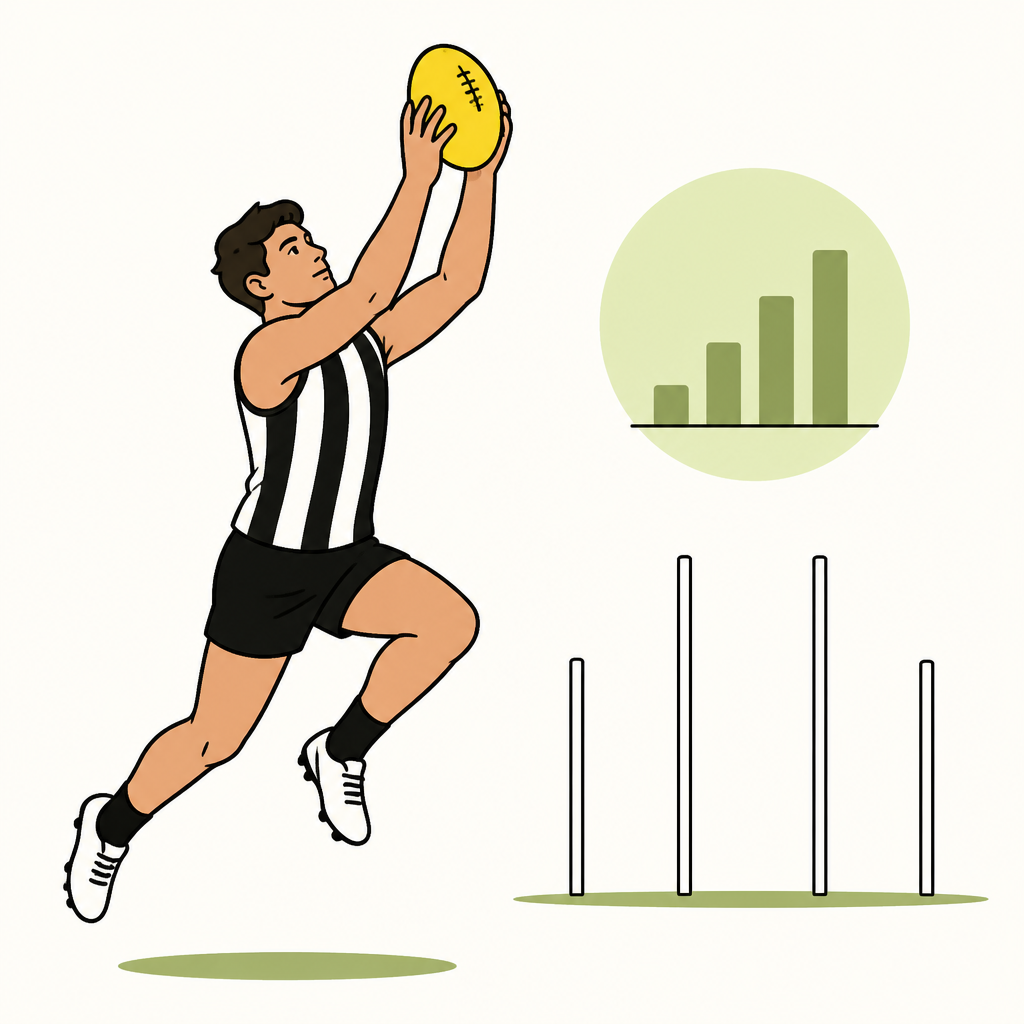
Clean catches from kicks.
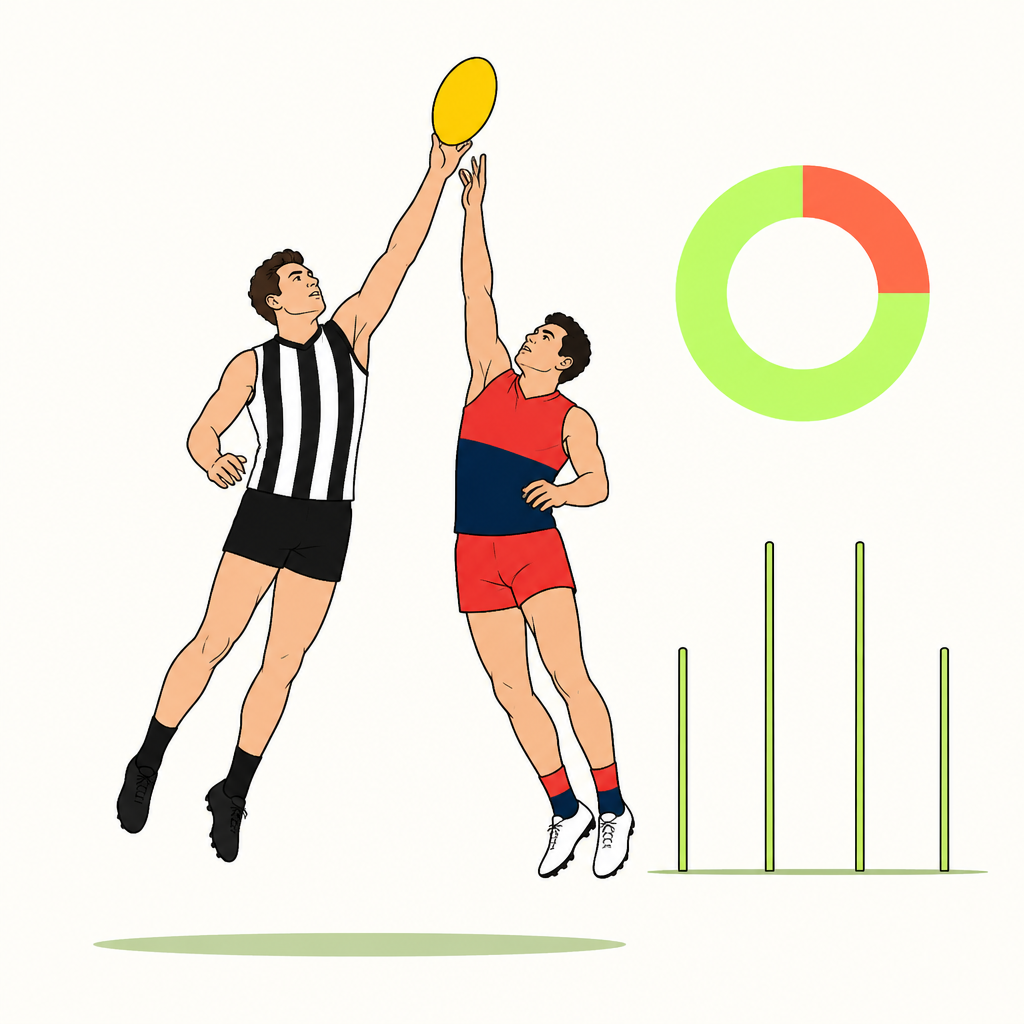
Ruck taps from stoppages.
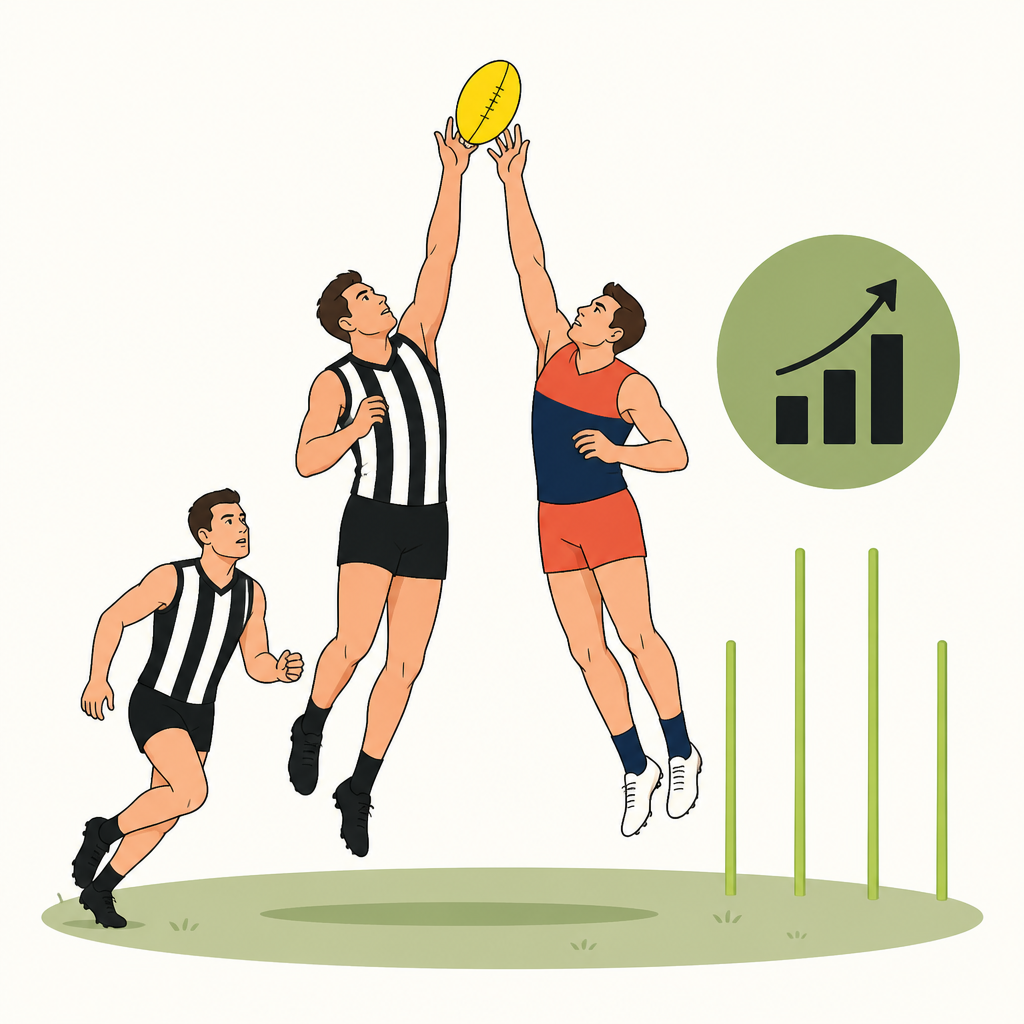
Wins from centre bounces or stoppages that move the ball away from congestion.
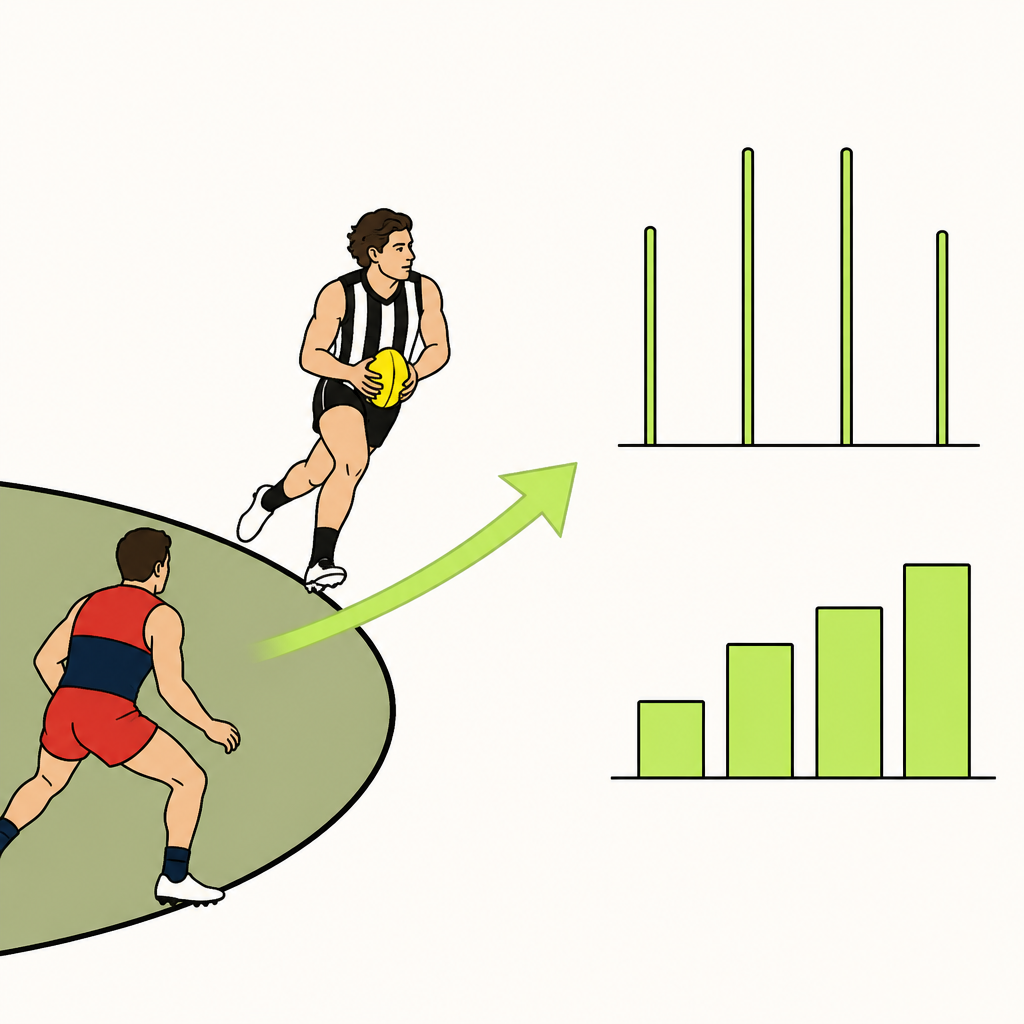
Times a team exits its defensive 50.
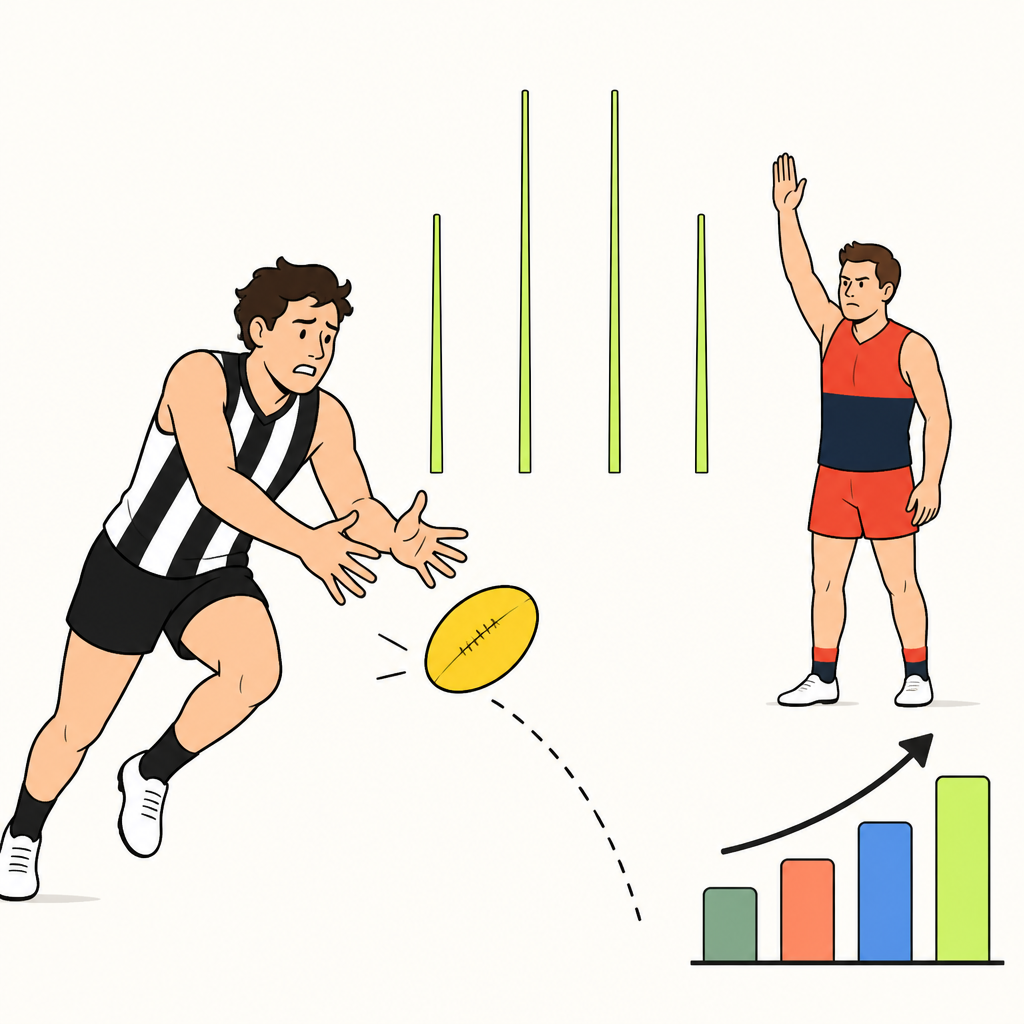
Major mistakes, such as bad disposals or free kicks against.
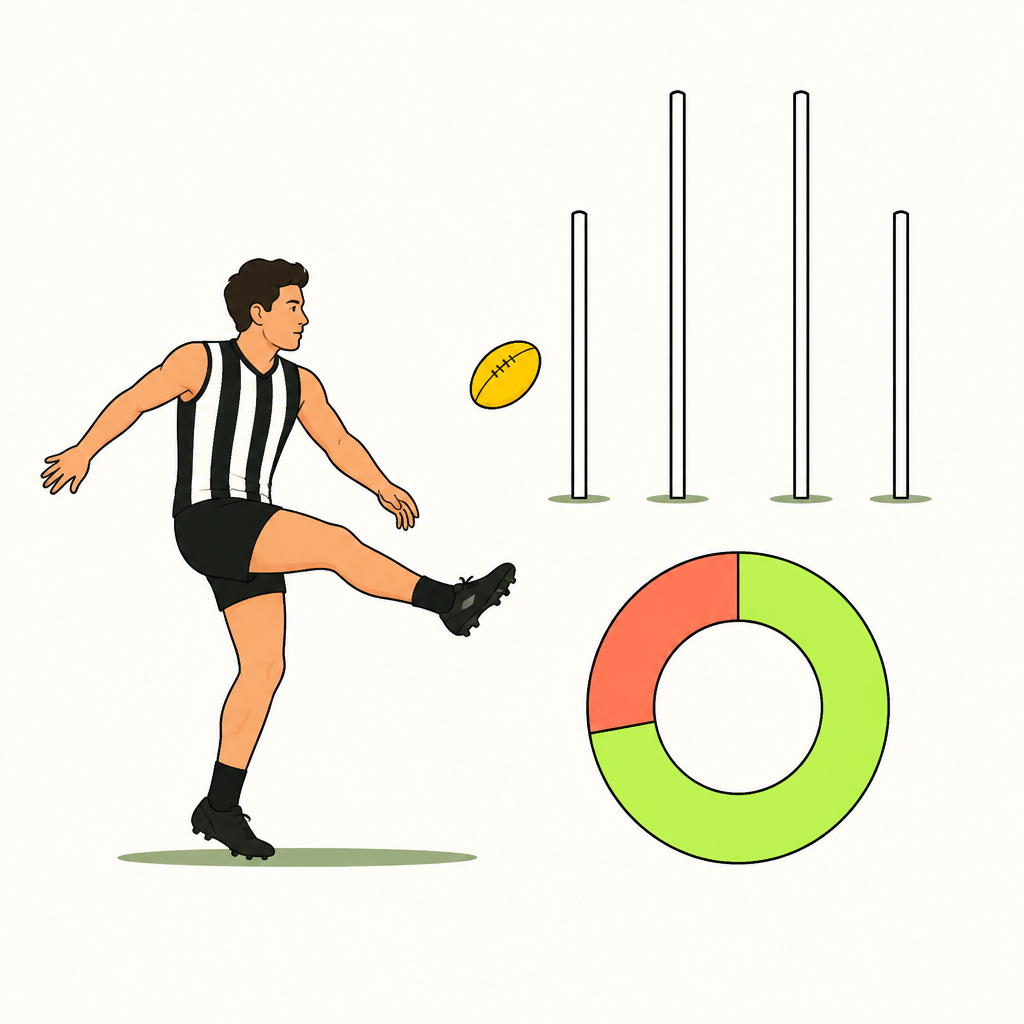
Goals as a percentage of scoring shots.