The raw data
Do runs depend on home runs and walks together? x1 = home runs, x2 = walks, y = runs. We use six familiar MLB clubs as a compact teaching sample.

Six teams
| Team | HR (x?) | Walks (x₂) | Runs (y) |
|---|---|---|---|
| Yankees | 245 | 520 | 690 |
| Dodgers | 221 | 540 | 696 |
| Red Sox | 198 | 505 | 652 |
| Astros | 214 | 560 | 706 |
| Cubs | 177 | 480 | 623 |
| Padres | 162 | 500 | 632 |
The model — from a line to a plane
One predictor drew a line. Two predictors draw a tilted sheet. Here's how to actually picture that.

Picture it on the field
In Chapter 1 you drew a line on a flat graph: home runs along the bottom, runs up the side. Two directions — a 2-D picture.
Add walks and you need a third direction. Picture the outfield as a flat grid: home runs running out to centre field, walks running foul-line to foul-line. Every spot on that grid is one (HR, walks) combination, and the model floats a predicted runs value above it like a height. Join those heights up and you get a flat, tilted sheet hovering over the field — a plane.
What each β does
β₁ is how steeply the sheet rises as you walk in the home-run direction; β₂ how steeply it rises in the walks direction; β₀ is the sheet's height above the corner where both are zero — the same "anchor" the intercept played in Chapter 1, and just as theoretical (no club hits 0 home runs and draws 0 walks).
What's a matrix? (and transpose)
Two new words before the formula — both simpler than they look.

A matrix is just a table of numbers
You've read them all chapter. We stack our data into the design matrix X — one row per team, columns for [1, HR, walks] — and the runs into a column y.
That leading column of 1s is a bookkeeping trick — it lets the intercept β₀ fall out of the same formula as the slopes.
Transpose: tip the table on its side
The little ᵀ in Xᵀ means transpose: flip the table so every row becomes a column. Take just the first three teams:
The first row of X, (1, 245), became the first column of Xᵀ. That's the whole operation — the table simply tips onto its side, so each variable ends up on its own row.
The formula, piece by piece
It looks scary. It's really just Chapter 1's slope, written for more than one predictor.
Reading each piece in plain English
Xᵀy — pairs each predictor with runs: how strongly do home runs, and walks, each track scoring across the teams? (This is Chapter 1's Sxy.)
XᵀX — the flipped table times the original: how much do the predictors spread out and overlap? (Chapter 1's Sxx, now a small grid that also notices when HR and walks move together.)
( )⁻¹ — the inverse, which is the matrix version of dividing.
The coefficients
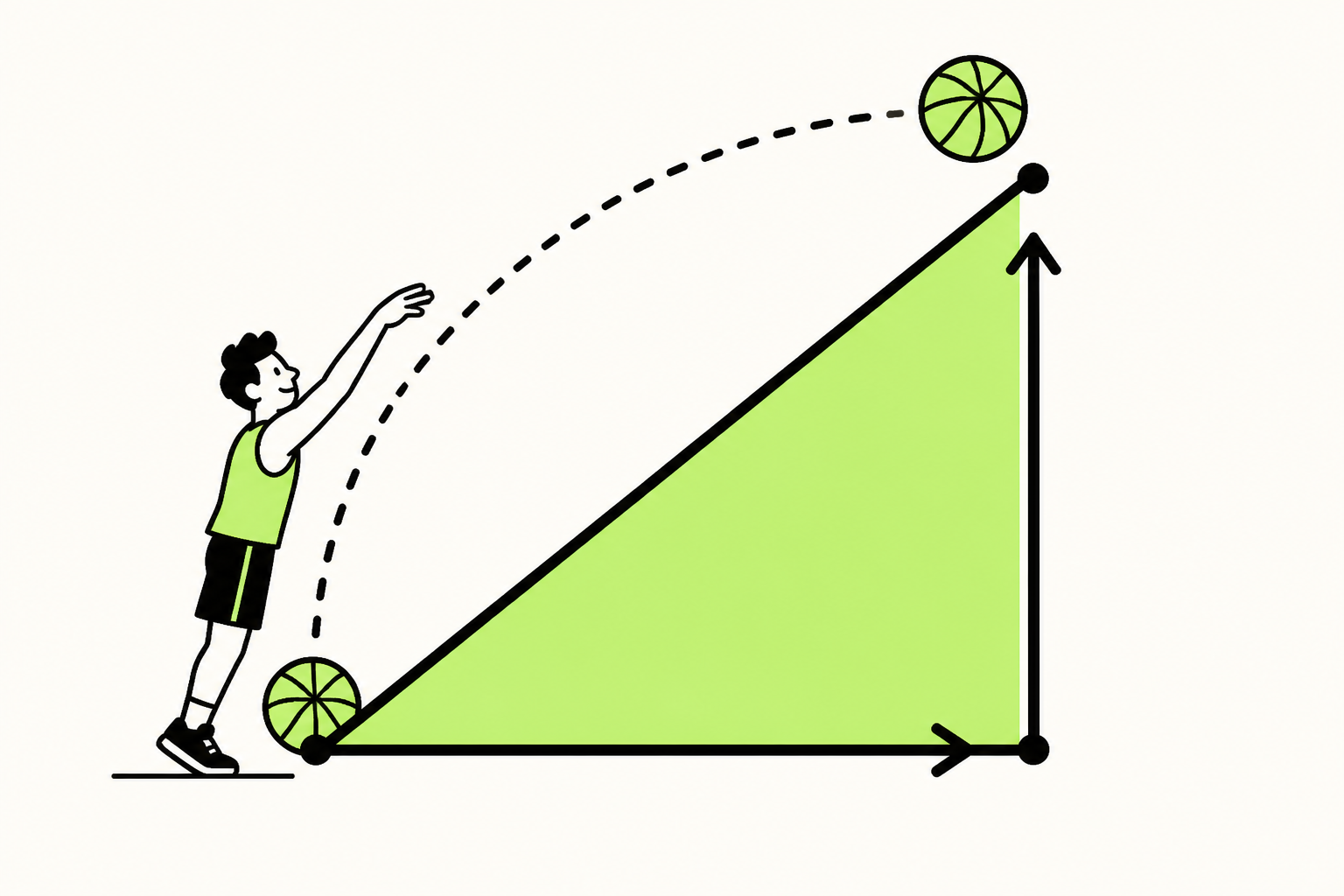
Solving the formula hands back all three numbers at once.
Interpret — "holding the other constant"
The one genuinely new reading skill. Each coefficient is read with the other predictor frozen.

β̂₁ = 0.508: among teams with the same number of walks, each extra home run is worth about 0.51 more runs on average.
β̂₂ = 0.819: among teams with the same number of home runs, each extra walk is worth about 0.82 more runs on average.
R² and adjusted R²
R² still measures variation explained — but adding predictors always nudges it up, so we adjust.

Is the model useful? The F-test
The overall F-test asks one question: do the predictors, together, explain anything?
Predict & write it up
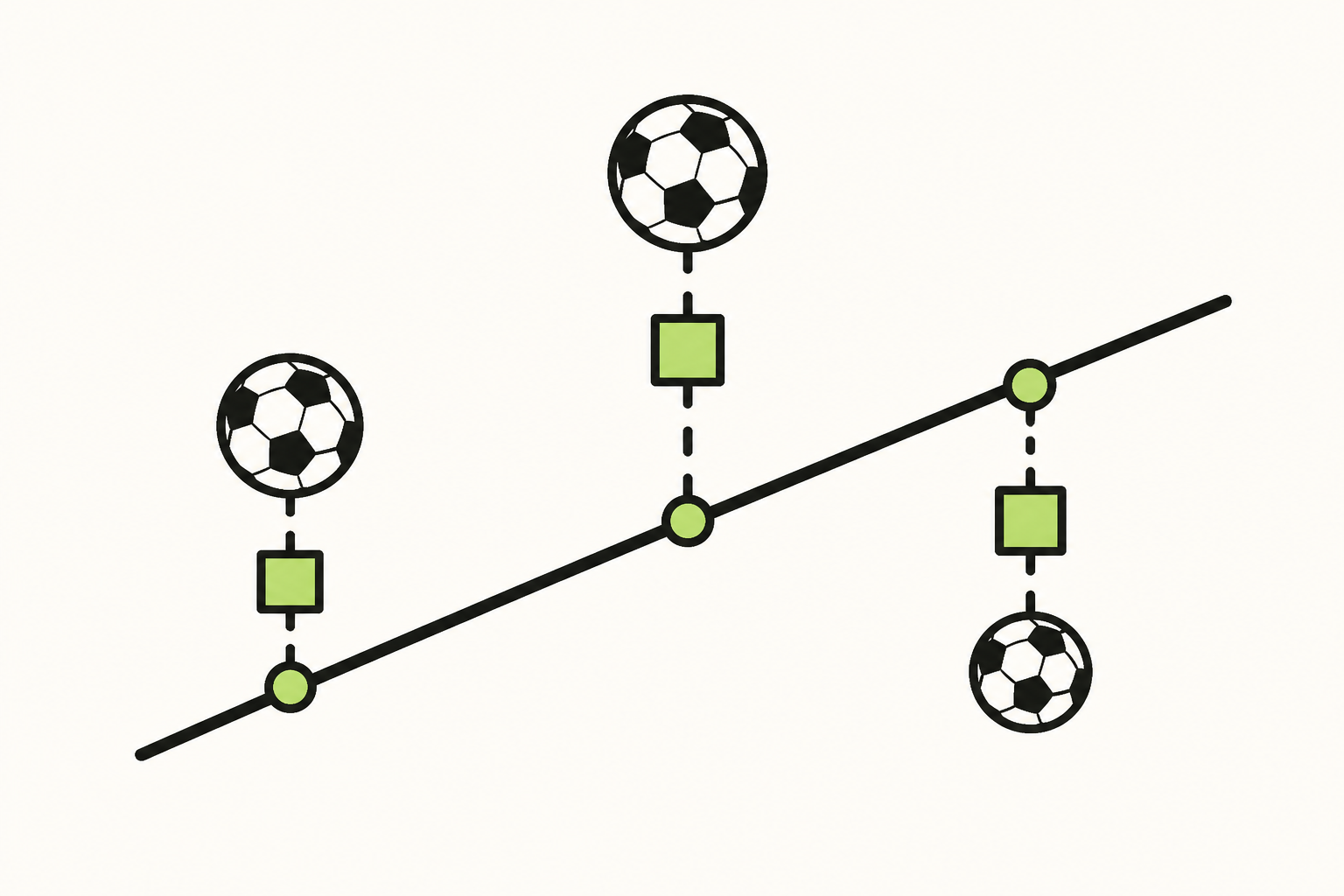
Plug new values into the fitted plane, then state the findings cleanly.
How to write it in an exam
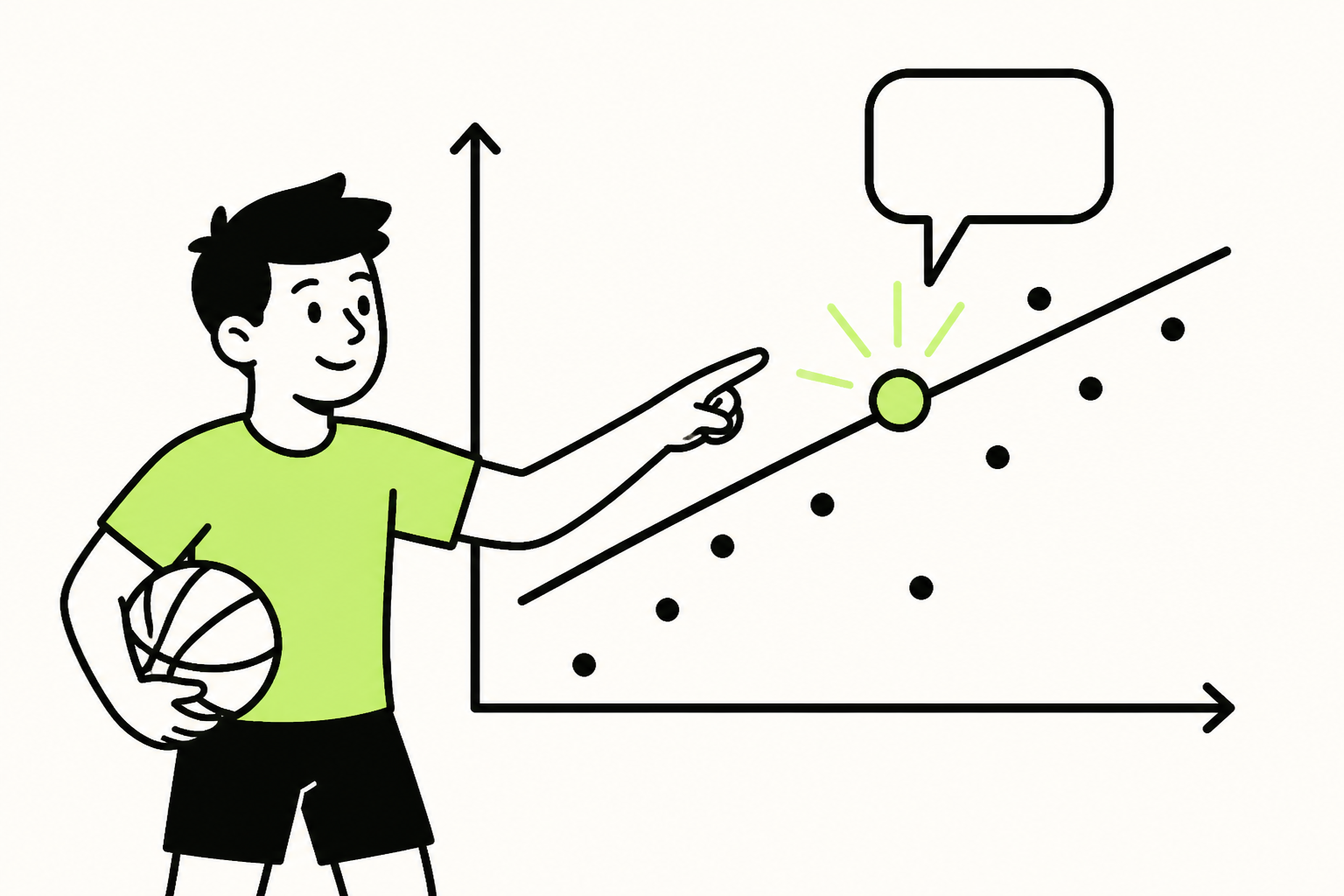
Slopes: Holding walks fixed, each home run adds ≈0.51 runs; holding home runs fixed, each walk adds ≈0.82 runs.
Fit: The two predictors explain 99.9% of the variation in runs (adjusted R² = 0.998).
Overall: The F-test (F = 1164.7, p ≈ 0) shows the model as a whole is highly significant.